
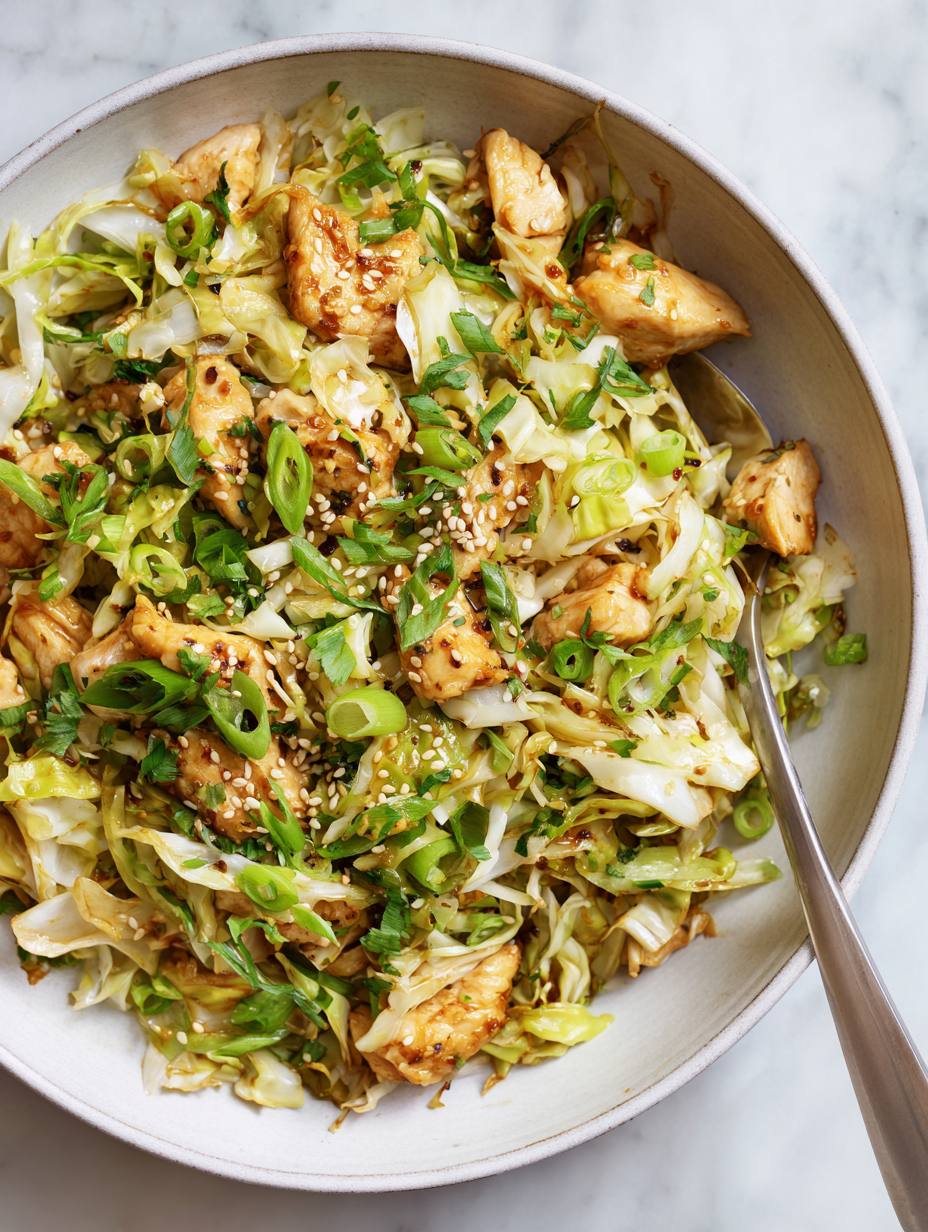
There’s something almost alchemical about stir-frying, especially with humble ingredients like chicken and cabbage. Watching them transform in the hot pan, releasing their scents—garlic, soy, a little caramelized onion—feels like magic, even if it’s just everyday cooking.
This dish isn’t about complicated techniques; it’s about trusting that a hot skillet and a quick toss can turn simple stuff into something satisfying. It’s quick enough for weeknights but has enough flavor complexity to make you pause. Plus, it’s a reminder that everyday ingredients can shine when treated right, turning routine into a small celebration.
Focusing on how the simple act of stir-frying transforms humble ingredients into something more than the sum of its parts, highlighting the alchemy in everyday cooking.
The unexpected joy of cabbage
- I love how a splash of soy and a quick toss can make cabbage taste unexpectedly sweet and smoky.
- There was a night I was rushing home, and this dish saved dinner—simple, fast, and so satisfying.
- Watching the cabbage wilt and caramelize in the pan always reminds me that good things happen with patience and heat.
- This recipe feels like a small act of rebellion—taking humble ingredients and turning them into something lively and flavorful.
The story behind this recipe
One evening, I was looking for a quick, nourishing meal after a long day, and I remembered how my grandma used to toss together cabbage and chicken with whatever was on hand. That simple combination stuck with me—its humble roots hiding a burst of flavor and comfort. Over the years, I kept tweaking it, trying to find that perfect balance of crispy, tender, and smoky, and this dish became my go-to for busy nights or when I needed a reminder that simple ingredients can still surprise. It’s a recipe born from necessity, yes, but also from the joy of turning everyday staples into something memorable.
Historical & Cultural Notes
- This stir-fry style likely originated in regions where quick, resourceful cooking was essential, like in busy Asian kitchens.
- Cabbage has been a staple in many cultures’ diets for thousands of years, prized for its durability and versatility in stir-fry dishes.
- The combination of chicken and cabbage in a quick stir-fry reflects a common practice of using leftovers and simple ingredients to create satisfying meals.
Key Ingredients and Tips
- Chicken: I prefer boneless, skinless breasts for quick cooking and tender bites—make sure to cut against the grain for maximum tenderness; the smell of lightly cooked chicken should be clean and slightly meaty, not rubbery or burnt.
- Cabbage: I love using fresh green cabbage, its crunch and mild sweetness really shine; slice it thin so it wilts quickly and evenly, and look for vibrant leaves that crackle when you chop them.
- Garlic: I mash mine into a paste to release more aroma—don’t skip it, the fragrance of garlic sizzling in oil is what makes this dish come alive; it should smell pungent and inviting, not raw or bitter.
- Soy Sauce: I use a good-quality, dark soy for depth—drizzle it near the end to keep that savory, umami punch; the sauce should be shiny and slightly salty, coating everything with a smoky hue.
- Sesame Oil: I add a splash at the end for a nutty aroma—use toasted sesame oil to get that rich, fragrant essence; it should shimmer and smell warm and toasty, not overpowering.
- Vegetable Oil: I stick with neutral oil like canola or grapeseed—high smoke point, so it crisps without smoke; the oil should crackle faintly when you toss ingredients in, signaling readiness.
Spotlight on key ingredients
Chicken:
- I prefer boneless, skinless breasts for quick cooking and tender bites—make sure to cut against the grain for maximum tenderness; the smell of lightly cooked chicken should be clean and slightly meaty, not rubbery or burnt.
- Cabbage: I love using fresh green cabbage, its crunch and mild sweetness really shine; slice it thin so it wilts quickly and evenly, and look for vibrant leaves that crackle when you chop them.
Cabbage:
- I love using fresh green cabbage, its crunch and mild sweetness really shine; slice it thin so it wilts quickly and evenly, and look for vibrant leaves that crackle when you chop them.
- Garlic: I mash mine into a paste to release more aroma—don’t skip it, the fragrance of garlic sizzling in oil is what makes this dish come alive; it should smell pungent and inviting, not raw or bitter.
Notes for ingredient swaps
- Protein: Swap chicken for turkey or lean pork—both cook quickly and add a slightly different richness.
- Cabbage: Use Napa or Savoy cabbage for more delicate leaves and a different texture—less crunch, more tender.
- Soy Sauce: Tamari is a gluten-free alternative with a deeper, slightly nuttier flavor—keep an eye on salt levels.
- Sesame Oil: Almond or peanut oil can replace sesame for a nutty aroma, but won’t have that toasted sesame scent.
- Oil: Avocado or light olive oil works well if you want a milder flavor and higher smoke point—less of that distinctive neutral note.
- Garlic: Fresh garlic can be replaced with garlic powder—use about 1/4 teaspoon per clove for convenience, but lose some aroma punch.
- Additional Flavor: A splash of rice vinegar or a squeeze of lemon can brighten the dish—add at the end for fresh, tangy contrast.
Equipment & Tools
- Wok or deep skillet: Provides high heat and ample surface area for quick stir-frying.
- Spatula: For tossing and stirring ingredients efficiently.
- Sharp knife: For precise slicing of chicken and cabbage.
- Chopping board: Prevents cross-contamination and provides a stable cutting surface.
Step-by-step guide to stir-frying
- Equipment ready: a large wok or deep skillet, a spatula, a sharp knife, and a chopping board. The wok should be heated to around 200°C (392°F).
- Slice 2 chicken breasts into thin strips — about 1 cm wide. Pat dry and season lightly with salt and pepper.
- Chop 1 small head of green cabbage into thin shreds. Aim for uniformity so it cooks evenly and wilts quickly.
- Mince 3 garlic cloves into a paste. Keep nearby to add at the right moment for maximum aroma.
- Heat 2 tablespoons of neutral oil in the wok over medium-high heat. When shimmering, add chicken strips.
- Cook chicken for about 3-4 minutes, stirring constantly. Look for a light golden color and firm texture. If it releases too much water, increase heat slightly.
- Add minced garlic to the chicken. Sauté for 30 seconds until fragrant—smell should turn pungent and inviting.
- Push chicken to one side of the pan. Add the cabbage in batches if needed, and stir-fry for 2-3 minutes until it just starts to wilt and turn slightly translucent.
- Pour 2 tablespoons of soy sauce over the cabbage and chicken. Toss everything together quickly for even coating. The mixture should turn a glossy, smoky hue.
- Continue stir-frying for another 1-2 minutes until the cabbage is tender but still crisp, and the chicken is cooked through. Look for a slight char and fragrant aroma.
- Finish with a drizzle of toasted sesame oil—about 1 teaspoon—and toss to combine. The oil should shimmer and smell nutty.
- Remove from heat. Rest for 1 minute before serving to let flavors settle and juices redistribute.
- Plate with a sprinkle of chopped scallions or sesame seeds if desired. Serve hot, straight from the pan.
Rest the stir-fry for 1 minute off heat to let flavors meld. Serve immediately, hot from the pan, garnished with optional scallions or sesame seeds for visual contrast.
How to Know It’s Done
- Chicken is cooked through, with no pink remaining and a firm texture.
- Cabbage is tender but still slightly crisp, with a bright, slightly caramelized edge.
- The final dish has a glossy appearance, fragrant garlic aroma, and smoky soy hue.
Quick Chicken and Cabbage Stir-Fry
Ingredients
Equipment
Method
- Heat your wok or deep skillet over medium-high heat until shimmering, then add the neutral oil.
- Add the sliced chicken breasts to the hot oil, stirring constantly. Cook for 3-4 minutes until the chicken is golden and cooked through, with no pink remaining.
- Add the minced garlic to the chicken, stirring quickly for about 30 seconds. The garlic should become fragrant, fragrant, and slightly golden, filling the air with aroma.
- Push the chicken and garlic to one side of the pan, then add the thinly sliced cabbage in batches if necessary. Stir-fry for 2-3 minutes until the cabbage just begins to wilt and turn translucent, with edges starting to caramelize slightly.
- Pour the soy sauce evenly over the cabbage and chicken, tossing everything together vigorously. The mixture should turn a glossy, smoky hue, and the cabbage will crisp slightly at the edges.
- Continue stir-frying for another 1-2 minutes until the cabbage is tender but still crisp, and the chicken is fully cooked. The dish should smell savory with a hint of caramelization and smoky aroma.
- Remove the pan from heat and drizzle the toasted sesame oil over the stir-fry. Toss gently to coat everything evenly with the fragrant, nutty oil.
- Let the stir-fry rest for a minute to allow flavors to meld, then serve immediately while hot, garnished with optional scallions or sesame seeds if desired.
Pro Tips for Stir-Frying
- Bolded mini-head: High heat for quick sizzle → Keep your pan hot enough that ingredients crackle immediately upon contact.
- Bolded mini-head: Prep ingredients in advance → Having everything sliced and ready prevents overcooking and promotes even stir-frying.
- Bolded mini-head: Don’t overcrowd the pan → Work in batches if needed; overcrowding causes steaming, not frying.
- Bolded mini-head: Use a light hand with soy → Drizzle near the end; too early, and it can burn or turn bitter.
- Bolded mini-head: Add garlic late → Sauté garlic just until fragrant, about 30 seconds, to avoid bitterness and burnt flavor.
- Bolded mini-head: Taste and adjust → Finish with a splash of soy or sesame oil; adjust seasoning while still hot for maximum flavor.
- Bolded mini-head: Rest briefly before serving → Let the stir-fry sit for a minute; flavors meld, and ingredients settle for better texture.
Common stir-fry mistakes and how to fix them
- FORGOT to watch heat; use medium-high for quick sear, then adjust as needed.
- DUMPED ingredients too quickly; add cabbage gradually to prevent steaming and sogginess.
- OVER-TORCHED the garlic; stir constantly and remove from heat if it starts to brown too much.
- UNDERESTIMATED cooking time; stir-fry until cabbage is tender and chicken is fully cooked, about 8 minutes.
Quick Fixes and Pantry Swaps
- If the stir-fry looks dull, splash in a bit more soy and toss quickly to shimmer.
- When ingredients stick, deglaze the pan with a teaspoon of water or broth, then stir.
- Splash some rice vinegar if the cabbage is too sweet or dull in flavor.
- Patch overcooked garlic by adding fresh, raw garlic at the end for punch.
- Shield burnt bits by removing them immediately and adding a splash of water to cool the pan.
Prep, store, and reheat tips
- Prep the chicken and cabbage by slicing and chopping ahead of time; store in airtight containers in the fridge for up to 24 hours for fresh crunch and flavor.
- You can marinate the chicken in soy and a dash of sesame oil overnight—this deepens the umami and shortens stir-fry time.
- Cooked stir-fry leftovers keep well in the fridge for up to 2 days; reheat on medium heat, stirring frequently until hot and fragrant, about 3-4 minutes.
- Frozen stir-fry components are best when used within a month; reheat from frozen in a hot pan, adding a splash of oil if needed, until steaming and fragrant.
- The flavors develop slightly after sitting—reheat with a drizzle of soy or sesame oil to revive aroma and shine, aiming for that crackling, smoky smell.
Top questions about stir-frying chicken and cabbage
1. How hot should the pan be?
Use a hot pan and quick movements to prevent sogginess and get that smoky flavor.
2. How do I tell when the chicken is cooked?
Slice the chicken thinly and against the grain for tender bites, and cook until just done.
3. When should I add garlic?
Add garlic towards the end of cooking to avoid burning and bitterness while keeping its aroma vibrant.
4. Can I cook it all at once?
Stir-fry in batches if needed to avoid overcrowding, which causes steaming instead of frying.
5. When do I add the soy sauce?
Soy sauce should be added near the end for flavor and to prevent burning, giving a smoky, glossy finish.
6. How do I choose good cabbage?
Use fresh, vibrant cabbage with crisp leaves for the best texture and flavor.
7. How much sesame oil should I use?
Finish with a drizzle of toasted sesame oil for aroma and flavor, added right before serving.
8. How do I know when the cabbage is ready?
Cook until the cabbage is tender but still slightly crisp, with a lightly caramelized edge for depth.
9. How do I reheat the stir-fry?
Reheat leftovers in a hot pan, stirring frequently to revive flavor and crispness, within 3-4 minutes.
10. Can I make this vegetarian?
For a vegetarian version, substitute chicken with tofu or tempeh, which will absorb flavors nicely.
This chicken cabbage stir fry is a reminder that some of the best meals come from just a handful of ingredients treated with care. The aroma of garlic and soy, paired with the crisp-tender cabbage, makes even the busiest nights feel a little slower, a little more thoughtful.
It’s a dish that’s rooted in simplicity but still offers a satisfying burst of flavor. No matter how often I make it, I find a quiet joy in that quick sizzle and the way everything comes together in the pan—simple, honest, real.

Hi, I’m Hannah Reynolds, the heart behind Seasoning Therapist. I believe food can comfort, restore, and gently reset us after a long day. I started Seasoning Therapist with one simple idea in mind: cooking is not just about feeding the body, it is about caring for the mind too. The right seasoning can change the mood of a dish, and sometimes even the mood of the person eating it. This blog is where I combine my love for thoughtful cooking with my belief that the kitchen can be a place of healing.
